Namibia, for Swiss passport holders
For Swiss citizens who visit, live in or settle in Namibia: the visas and permits that apply, what they allow, the documents to prepare and where to apply. The Namibian authorities decide; this guide helps you prepare.
Checked on 21 October 2026Authority · Ministry of Home Affairs, Immigration, Safety and Security (MHAISS), Corner of Hosea Kutako Drive and Harvey Street, Windhoek North, Namibia · mha.gov.na ↗
Holiday and tourist visa
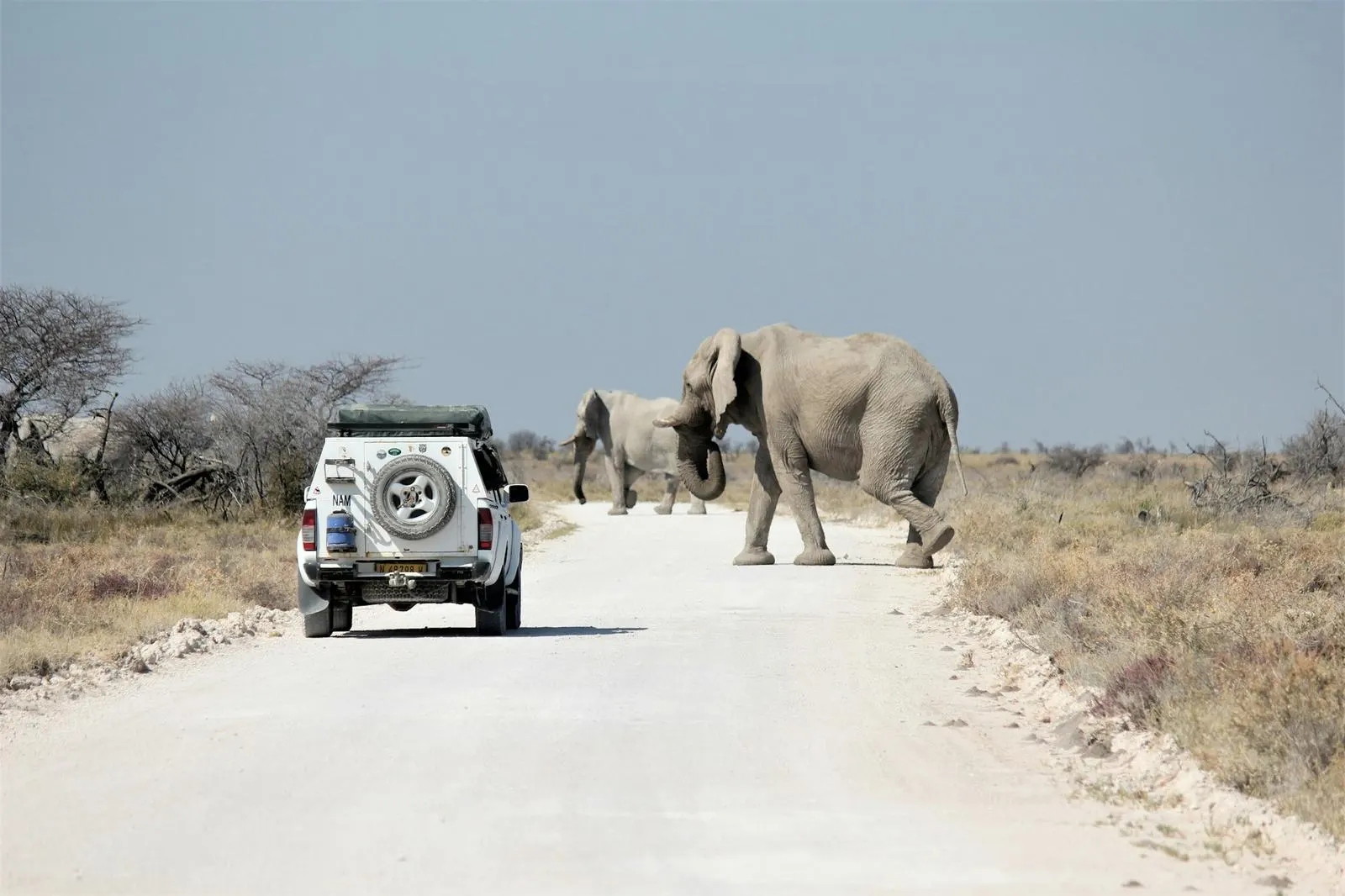
Since 1 April 2025 Swiss citizens with an ordinary passport need a visa for Namibia, also for a holiday. They are eligible for the visa on arrival, which can be applied for online in advance as an e-Visa on Arrival or at a designated port of entry. The holiday visa allows a stay of up to 90 days in a calendar year.
What it allows
The visa covers holidays and tourism. The Ministry describes the holiday visa as a multiple-entry visa of up to 90 days, so you may leave and re-enter Namibia while it is valid. The total stay may not exceed 90 days in a calendar year.
A holiday or visitor's visa does not allow you to work in Namibia, paid or unpaid. Work requires a work visa or an employment permit (see Work permit).
Who applies and where
Each traveller needs a visa, including children; children under six pay no fee. You can apply online before you travel on the Ministry's e-services portal, or on arrival at a designated port of entry.
Namibia's embassy in Berlin lists ten ports of entry where visas on arrival are issued: Hosea Kutako International Airport, Walvis Bay International Airport, Oshikango, Trans-Kalahari, Oranjemund, Noordoewer, Katima Mulilo, Impalila Island, Ngoma and Mohembo. Applying online in advance saves time at the counter.
Steps
- Check your passportIt must be valid for at least six months beyond your stay and have at least three blank pages.
- Apply onlineRegister on the e-services portal, choose Visa on Arrival, complete the form, upload a recent passport photograph and a scan of your passport, and state the number of days you need.
- Pay by cardPayment is made online by card. A service fee may be added; the portal shows the total before you pay.
- Print the e-visaPrint the approved e-visa and carry it with your passport. An approval letter alone does not permit entry: the visa itself must be issued.
- On arrivalComplete the arrival form and sign the arrival section of your e-visa.
File size
The e-services portal accepts only small files, and many passport scans and photographs are too large to upload. Compress them before uploading, for example with a free online tool such as FreeConvert (https://www.freeconvert.com/) or PDF Compressor (https://pdfcompressor.com/). These are examples only; the Club does not recommend a particular tool.
A passport scan contains personal data. Choose a tool you are comfortable with, or use the export or resize function on your own computer or phone.
What to bring
Fees
Visa on arrival for nationals of non-African countries, including Switzerland: N$1,600 per adult; N$800 per child aged 6 to 11; no charge for children under 6. The Ministry states that these fees are subject to review. Check the portal for the current amount before you travel.
Good to know
- The Ministry grants the number of days you request, up to 90 days in a calendar year. Request the full period you need when you apply.
- If you arrive close to the end of your visa's validity, you receive only the remaining days.
- If you need more time, an extension can be requested from the Ministry before your visa expires (see Visa extension).
- Swiss diplomatic and official passports are treated differently; this page concerns ordinary passports.
- The online portal has had interruptions. If it is unavailable, the visa on arrival can still be applied for at the designated ports of entry.
- Cruise passengers landing at Walvis Bay or Lüderitz pay a separate daily harbour fee; ask your cruise operator.
Example letters and printable checklists for this chapter are in the Visa Pack. →
Holiday and tourist visa extension
Swiss citizens are eligible for a Namibian visa on arrival, which may permit a stay of up to 90 days, subject to the entry requirements and the period granted by immigration. If you wish to remain beyond your authorised period, you may be granted up to an additional 90 days. An extension is not automatic: the Ministry decides whether it is granted and, if so, for how long.
Understanding your permitted stay
Your authorised stay is determined by the visa or entry permission issued to you. Always check the expiry date and the conditions recorded in your passport or visa documentation.
If you wish to remain in Namibia beyond your authorised period, visit the Ministry of Home Affairs, Immigration, Safety and Security (MHAISS) to enquire about the applicable extension procedure. An extension is not automatic. The Ministry determines whether an extension is granted and, if approved, the additional period of stay.
Where to apply
Ministry of Home Affairs, Immigration, Safety and Security (MHAISS), corner of Hosea Kutako Drive and Harvey Street, Windhoek North, Namibia.
Visit the Ministry in person to enquire about the current requirements, the application procedure, submission deadlines and applicable fees. Bring your passport and any relevant visa documents. If you intend to apply for an extension, prepare your supporting documents in advance so that you are ready to submit your application when permitted.
Outside Windhoek, the Ministry's fact sheet lists offices where extensions are applied for in Keetmanshoop (Karas), Rundu (Kavango East), Outapi (Omusati), Katima Mulilo (Zambezi), Grootfontein, Ondangwa and at Walvis Bay Harbour.
When to apply
The Ministry's published visa-extension form states that applications should be submitted two months before the current permit expires.
Members have reported that, in their experience, tourist visa-extension applications were only accepted one week before the current visa expired (see Members' experience below).
Visit the Ministry in person to establish when you can submit your application. Do not rely solely on the published deadline or on other visitors' experiences, as the applicable procedure may depend on your circumstances.
Steps
- Check your expiry dateEstablish the final date on which you are authorised to remain in Namibia.
- Visit the MinistryEnquire about the applicable submission deadline and requirements.
- Prepare your documentsObtain the necessary photocopies and have them certified where required.
- Submit your applicationFollow the instructions provided by the immigration office.
- Keep your submission recordsRetain any receipt or reference number and follow the Ministry's instructions while awaiting a decision.
While you wait
Processing times vary and no timeframe is guaranteed. Submitting an application does not automatically extend your authorised stay. If your expiry date is approaching, confirm your legal position directly with the immigration authorities, in person at the Ministry.
Checklist
Departure arrangements
If your travel plans depend on the outcome of your extension application, the Club strongly recommends booking a flexible flight ticket.
The Ministry determines the duration of any extension granted. Even if you request an additional 90 days, you may be granted a shorter period, such as 60 days. In that case you would need to adjust your departure date and possibly rebook your flight.
If you are not yet ready to book a flight, or would like guidance on your options, contact the Swiss Desk. The Club will be happy to provide further information and help you plan your departure arrangements.
This checklist is intended to help you prepare. Confirm the complete list of required documents directly with MHAISS before submitting your application.
How to obtain certified copies in Windhoek
- Make photocopiesMake clear, legible black-and-white copies of your passport's personal-information page, your current visa or entry endorsement, and any additional documents required by immigration. Recommended location: Maerua Printing & Signs, Maerua Mall, Windhoek, which can assist with photocopying; confirm its current location within the mall when you arrive.
- Have the copies certifiedTake your photocopies and original passport to an authority that provides document-certification services and ask the official to certify the copies as true copies of the originals. Suggested locations in Windhoek: Central Police Station, 10 John Meinert Street; Eros Airport Police Station, 3 Aviation Road; or the Ministry itself, where some documents may be certified directly, while others may need to be certified by another authorised authority such as a police station. Bring your original passport and all photocopies requiring certification.
- If certification is not possibleMembers have reported that police stations were not always able to certify foreign documents. If this happens to you, contact the Club's Swiss Desk.
Important reminders
- Check the expiry date on your actual visa or entry permission.
- Visit the Ministry in person to confirm the current extension procedure.
- Establish the applicable submission deadline before making travel arrangements.
- Prepare your original passport and the required certified copies.
- Explain your reasons for requesting an extension clearly and truthfully.
- Confirm any applicable fees and payment procedures.
- Do not assume your application will automatically be approved.
- Do not assume that submitting an application automatically extends your authorised stay.
- Do not overstay your authorised period without confirmation from immigration that you are legally permitted to remain.
- A tourist or visitor visa does not authorise employment in Namibia.
Example letters and printable checklists for this chapter are in the Visa Pack. →
Digital nomad visa
Namibia's Digital Nomad Visa is for freelancers, self-employed professionals and remote employees who work for companies or clients outside Namibia. It allows a stay of up to six months to live, work remotely and travel in Namibia, for an applicant who earns at least USD 2,000 a month from outside the country. The Namibia Investment Promotion and Development Board (NIPDB) supports the application; the Ministry of Home Affairs, Immigration, Safety and Security decides and issues the visa.
What it allows
NIPDB states that the visa grants a stay of six months, during which the holder may live, work remotely and travel in Namibia, provided the income is earned from outside Namibia.
The visa is not renewable. NIPDB states that applicants may reapply only 12 months after the date on which the visa expires, and that no change of condition is allowed on a Digital Nomad Visa. Ask the Ministry what this means for your plans before you apply.
Who qualifies
The visa is for people who work remotely for companies or clients based outside Namibia: freelancers, self-employed professionals and remote employees.
NIPDB lists the following minimum monthly income: USD 2,000 for the applicant, USD 1,000 for an accompanying spouse and USD 500 for each accompanying child. You must be able to support yourself and any accompanying family members during the stay.
You also need a valid passport and valid international health and travel insurance that covers you while you are in Namibia.
Who applies and where
The application is supported by NIPDB and decided by the Ministry of Home Affairs, Immigration, Safety and Security (MHAISS). NIPDB issues a motivation letter, which it submits directly to the Ministry together with the application forms and supporting documents.
NIPDB's page does not give a separate submission address or an online portal for this visa. Contact NIPDB first to confirm how to lodge your application: Investment House, corner of Garten and Dr A B May Streets, Windhoek; telephone +264 83 333 8600; e-mail info@nipdb.com; Monday to Friday, 08:00 to 17:00. The enquiry form on NIPDB's page is an enquiry only, not an application.
Steps
- Check that you qualifyYour work must be for companies or clients outside Namibia, and your income must meet the monthly minimum for you and any accompanying family members.
- Contact NIPDBAsk NIPDB how to lodge the application and confirm the current documents, fee and timing.
- Prepare the forms and documentsComplete the visa application form (3-1/0033), the medical certificate (3-1/0003) and the radiological report (3-1/0004), available on NIPDB's page, and gather the documents in the checklist.
- NIPDB motivation letterNIPDB submits its motivation letter directly to the Ministry with your application forms and supporting documents.
- Decision and paymentAfter the Ministry approves the application, the visa fee is paid. A local representative may pay the fee directly to the Ministry on your behalf.
- Loose entry visaOnce payment is confirmed, the Ministry issues a loose entry visa, which NIPDB describes as the official documentation for entry into Namibia. Travel with it and your passport.
Checklist: applicant
Checklist: accompanying spouse and children
Fees and timing
NIPDB lists the visa fee as N$3,300, excluding other expenses, payable after the Ministry has approved the application. NIPDB's page refers both to payment before arrival and to payment on arrival; confirm with NIPDB when and how to pay.
No processing time is published. Ask NIPDB about the current timing and apply well ahead of your intended arrival date.
Precautions
The Ministry of Home Affairs, Immigration, Safety and Security decides on the visa; NIPDB supports the application. No person or organisation outside the Ministry can guarantee approval. If you use a representative of any kind, insist on a written engagement agreement setting out the services and fees, and an invoice for every payment. Pay official fees only to the Ministry against an official receipt, keep copies of everything you sign and pay, and report any request for an unofficial payment to the Anti-Corruption Commission (ACC) of Namibia.
Good to know
- In practice, approval can take time and is not guaranteed. Meeting the requirements does not guarantee approval.
- The visa lasts six months and cannot be renewed. Plan your departure before it expires.
- You may reapply only 12 months after the visa has expired.
- The visa is for remote work for companies or clients outside Namibia. To work for an employer in Namibia, see Work permit.
- NIPDB's page does not deal with tax or social security. Ask your employer and a tax adviser how a six-month stay in Namibia affects you in Switzerland and in Namibia.
- Documents not in English need an English translation.
- Keep copies of every form, receipt and reference number.
Example letters and printable checklists for this chapter are in the Visa Pack. →
Work permit
A Swiss citizen who wants to work in Namibia needs authorisation before starting work. There are two routes: a short-term employment permit (work visa) of up to six months, applied for online, and an employment permit for longer employment, decided by the Immigration Selection Board. A holiday or visitor's visa never allows work.
What it allows
A short-term employment permit allows a defined assignment of up to three or six months, for example under a contract or tender awarded to the employer.
An employment permit allows you to reside in Namibia and work under the conditions and for the period stated in the permit. The Immigration Control Act requires the holder to comply with those conditions; a change of employer, position or conditions needs the Ministry's approval.
Under the Immigration Control Act, a visitor's entry permit does not authorise employment, business or study in Namibia.
Who applies and where
The application is prepared jointly by the employee and the Namibian employer. The employer explains why the position cannot be filled by a Namibian and provides company documents.
Short-term employment permits are applied for online on the Ministry's e-services portal. Employment permit applications are submitted to the Ministry of Home Affairs, Immigration, Safety and Security; the Immigration Selection Board decides and the Chief of Immigration issues the permit.
Steps
- Employer advertises the postFor an employment permit the Ministry asks for proof that the vacancy was advertised in a local newspaper, with the CVs or names of Namibian applicants who were not appointed.
- Gather the applicant's documentsForms, medical and radiological reports, police clearance, qualifications and passport copy, translated into English where necessary.
- Gather the employer's documentsEmployer's representation (work offer), company profile, deed of surety and Social Security registration.
- Submit the applicationOnline for a short-term permit; to the Ministry for an employment permit. Keep a copy of everything submitted.
- DecisionThe Immigration Selection Board considers employment permit applications. Do not start work before the permit is issued.
- EndorsementAfter approval, present the approval letter, your passport and the original payment receipt so that the permit can be endorsed in your passport.
Checklist: employment permit (new)
Checklist: short-term employment permit (up to six months)
Fees and processing
Short-term employment permit, as listed on the e-services portal: N$1,600 for up to three months; N$3,200 for up to six months.
Employment permit, as listed by the Ministry: N$2,600, payable after approval, for a first application and for a renewal.
Namibia's embassy in Washington indicates that an employment permit application generally takes two to four months, and that incomplete documents delay it. Apply well ahead of your planned start date.
Precautions
The Ministry of Home Affairs, Immigration, Safety and Security decides on work permits. Under the Immigration Control Act, employment permit applications are considered by the Immigration Selection Board, whose members are appointed by the Minister. No person or organisation outside the Ministry can guarantee approval.
Submit your application directly to the Ministry, or online on its e-services portal for a short-term employment permit. If you use a representative of any kind, insist on a written engagement agreement setting out the services and fees, and an invoice for every payment. No representative can guarantee approval.
Pay official government fees only to the Ministry and always ask for an official receipt.
Keep copies of all documents you sign, payments you make and reference numbers you receive.
Requests for unofficial payments may be reported to the Anti-Corruption Commission (ACC) of Namibia.
Good to know
- In practice, approval can take time and is not guaranteed. Meeting the requirements does not guarantee approval.
- Do not start work on a holiday visa while waiting for a permit.
- The period of validity is set by the Ministry. The Namibia Investment Promotion and Development Board (NIPDB) describes the general employment permit as usually valid for two years; check the dates in your permit.
- A renewal asks, among other things, for proof of Namibian tax payment and a progress report on training Namibian employees and transferring skills.
- The Ministry's fee list includes a temporary residence permit for an accompanying spouse and dependent children of a permit holder; ask the Ministry about it when you apply.
- Documents not in English must be translated by an official translator.
- Time spent in Namibia on an employment permit does not count towards domicile under the Immigration Control Act.
- If you work remotely for an employer or clients outside Namibia, see Digital nomad visa.
- Ministry e-services portal: Short-Term Employment Permit (up to 6 months) ↗
- Ministry: permits, general information (requirements and fees) ↗
- Ministry of Home Affairs, Immigration, Safety and Security ↗
- Immigration Control Act 7 of 1993 (Legal Assistance Centre) ↗
- Anti-Corruption Commission (ACC) of Namibia ↗
Example letters and printable checklists for this chapter are in the Visa Pack. →
Investor visa
Since 1 September 2026 Namibia offers the Employment Permit to Conduct a Business, also called the Investor Permit, for foreign investors whose investor status has been confirmed by the Namibia Investment Promotion and Development Board (NIPDB). It may be issued for up to five years and serves at the same time as work authorisation. Applications go through NIPDB, which assesses and recommends; the Ministry of Home Affairs, Immigration, Safety and Security makes the final decision. Short business visits, such as meetings or exploring opportunities, are a separate matter and do not allow work.
Business visits
Namibian embassies describe the business visa as covering meetings, conferences, workshops and exploring business opportunities. It does not allow employment of any kind. Check on the Ministry's e-services portal or with the Ministry which visa category applies to your visit before you travel.
What the Investor Permit allows
The permit serves as both residence and work authorisation for the approved business activity. NIPDB states that it may be issued for up to five years, against the two years for which the standard employment permit is usually issued. The exact period is set in the immigration approval.
NIPDB describes the permit as a more streamlined and predictable process that gives qualifying investors and their core staff more certainty for long-term planning. Ask NIPDB whether and how core staff are covered in your case.
Who applies and where
The permit is for foreign investors whose investor status NIPDB has confirmed. Both new businesses and existing owners who expand or continue a qualifying activity may be considered.
NIPDB is the designated first point of call: all Investor Permit applications are submitted through NIPDB, by e-mail to investorpermit@nipdb.com or in person at the NIPDB office, Investment House, corner of Garten and Dr A B May Streets, Windhoek. Application forms and document requirements are available from the NIPDB office and website, and from the Ministry's website and offices countrywide, including the One Stop Centre at the BIPA head office in Windhoek.
Applicants who do not qualify for the Investor Permit apply through the existing employment permit process at the Ministry (see Work permit).
Who decides
NIPDB confirms investor status, carries out an economic evaluation of the proposed investment and submits its recommendation to the Ministry of Home Affairs, Immigration, Safety and Security for consideration by the Immigration Selection Board.
NIPDB's role ends when it submits its recommendation. The final decision on the application rests with the Ministry. Questions about the decision, the permit conditions and the endorsement are therefore for the Ministry.
Steps
- Contact NIPDBIf you are unsure whether your business qualifies, write to NIPDB before you apply.
- Prepare the applicationComplete the prescribed application form, the NIPDB Assessment Form and the visa application form, and gather the documents in the Investor Permit checklist.
- Submit through NIPDBSubmit the complete application, in the prescribed form and with all supporting documents, through NIPDB. NIPDB confirms investor status and evaluates the investment.
- Immigration decisionNIPDB submits its recommendation to the Ministry for consideration by the Immigration Selection Board. The final decision rests with the Ministry.
- Approval and paymentAfter approval the fee is paid and the permit is issued.
Checklist
Fees and timing
Fee: N$2,600, the same as a general employment permit, payable after approval. Confirm with NIPDB whether it is charged once or per year.
NIPDB aims to complete its assessment and submit the application to the Ministry within 30 working days. It advises applying two to three months before your intended entry, or before your current permit expires.
Precautions
The Ministry of Home Affairs, Immigration, Safety and Security makes the final decision; NIPDB assesses and recommends. No person or organisation outside the Ministry can guarantee approval. If you use a representative of any kind, insist on a written engagement agreement setting out the services and fees, and an invoice for every payment. Pay official fees only to the Ministry against an official receipt, keep copies of everything you sign and pay, and report any request for an unofficial payment to the Anti-Corruption Commission (ACC) of Namibia.
Good to know
- In practice, approval can take time and is not guaranteed. Meeting the requirements does not guarantee approval.
- NIPDB states that the minimum investment, turnover or capital criteria have not yet been formally published. It currently considers capital investment, economic contribution, employment creation, skills transfer, local value addition and other socio-economic benefits.
- Holders of an existing employment permit keep it until it expires and may then apply for the Investor Permit.
- If you do not qualify as an investor, the standard employment permit route through the Ministry remains open (see Work permit).
- Applications are submitted manually through NIPDB, not on the e-services portal.
- A business visit on a holiday or business visa does not allow you to work in or run a business in Namibia.
- NIPDB: Employment Permit to Conduct a Business (Investor Permit) ↗
- NIPDB: announcement and clarification of the application process (2 September 2026) ↗
- Ministry of Home Affairs, Immigration, Safety and Security ↗
- Ministry e-services portal: Visa on Arrival ↗
- Anti-Corruption Commission (ACC) of Namibia ↗
Example letters and printable checklists for this chapter are in the Visa Pack. →
Permanent residency
A permanent residence permit allows a foreign national to live in Namibia permanently. The Immigration Selection Board decides each application against criteria set in the Immigration Control Act, such as good character, means or qualifications, and the likely benefit to Namibia. A person already in Namibia on a permit may apply from within the country.
What it allows
The holder may reside permanently in Namibia. Permanent residence is also the basis for a later application for citizenship by naturalisation (see Naturalisation).
Who qualifies
Under section 26 of the Immigration Control Act the Board may authorise a permanent residence permit only if the applicant shows that he or she is of good character; will assimilate with the inhabitants of Namibia within a reasonable time; is not likely to be harmful to the welfare of Namibia; has sufficient means, or qualifications likely to make him or her efficient in the intended work; and does not intend to take up work in which enough people are already engaged in Namibia.
The same section provides a family route: the spouse, dependent child, or destitute, aged or infirm parent of a person permanently resident in Namibia, who is able to maintain them and undertakes to do so in writing.
The Act sets criteria rather than a fixed waiting period. Ask the Ministry what it currently expects in your situation.
Who applies and where
Applications are made on the prescribed form to the Chief of Immigration at the Ministry of Home Affairs, Immigration, Safety and Security, and are considered by the Immigration Selection Board. A person who holds an employment, student or visitor's permit may apply while in Namibia.
Steps
- Check the criteriaConsider how you meet each criterion and gather evidence for it.
- Obtain police clearancesFrom Switzerland (your country of origin) and the latest Namibian police clearance.
- Complete the formsIncluding the medical and radiological reports, which must be completed by a doctor and a radiologist.
- Submit to the MinistryKeep a full copy of the application and any reference number.
- DecisionThe Immigration Selection Board decides. If approved, present the approval letter, your passport and the original payment receipt for endorsement.
Checklist
Fees
The Ministry lists the permanent residence permit fee as N$20,000, payable after approval. Confirm the current amount with the Ministry.
Good to know
- If an application is refused, the Act generally requires the applicant to wait at least six months before applying again, unless new information or changed circumstances arise.
- Permanent residence holders who travel need a re-entry visa; ask the Ministry about it when your permit is endorsed.
- Documents not in English need an official English translation.
- Ten years of ordinary residence in Namibia on a permanent residence permit is the Ministry's stated basis for applying for citizenship by naturalisation.
- Decisions can take a long time. Plan your finances accordingly and keep your own residence status valid while you wait.
Example letters and printable checklists for this chapter are in the Visa Pack. →
Residency by marriage
A foreign national married in good faith to a Namibian citizen, and ordinarily resident in Namibia by virtue of that marriage, is domiciled in Namibia under the Immigration Control Act. Since 21 September 2026 the Ministry issues a certificate of domicile to such spouses on application. The spouse of a permanent resident follows a different route.
Spouse of a Namibian citizen
Section 22(1)(c) of the Immigration Control Act gives domicile to a person ordinarily resident in Namibia by virtue of a marriage entered into in good faith with a Namibian citizen. Under section 2 of the Act, the permit provisions do not apply to domiciled persons and their spouses and dependent children, subject to limited exceptions. Confirm with the Ministry how this applies to you.
Regulations published in December 2024 (Government Notice 389 of 2024) introduced a certificate of domicile as proof of this status. According to press reports, the Ministry began issuing the new certificates on 21 September 2026; they replace the certificates of identity previously issued to foreign spouses. Existing confirmation letters of domicile were reported to remain valid until further notice.
Who applies and where
The foreign spouse applies, with supporting affidavits from both spouses. As reported, applications are made in person at designated counters of the Ministry of Home Affairs, Immigration, Safety and Security; applications sent by e-mail are not accepted. Ask the Ministry which office handles applications in your region.
Steps
- Register the marriageA marriage that is not yet entered in the Namibian Marriage Register, including a customary marriage, must be registered first.
- Prepare the documentsObtain certified copies of identity documents and the marriage certificate, police clearances and proof of residence.
- Make the affidavitsBoth spouses make affidavits, sworn before a commissioner of oaths, setting out the marriage and the motivation for the application.
- Apply in personSubmit the application at a designated Ministry counter. Both spouses may be interviewed to confirm that the marriage is genuine.
- Pay and collectThe fee is paid after approval and before the certificate is issued.
Checklist
Fees
As reported, the certificate of domicile costs N$1,600, payable after approval. Confirm the amount with the Ministry.
Spouse of a permanent resident or permit holder
The spouse of a person permanently resident in Namibia may apply for permanent residence under section 26(3)(g) of the Immigration Control Act, with the resident spouse undertaking in writing to maintain the applicant (see Permanent residence).
The Ministry's fee list includes a temporary residence permit for the accompanying spouse and dependent children of a permit holder. Ask the Ministry about this when the main permit is applied for.
Good to know
- The marriage must be entered into in good faith. The Ministry may interview both spouses to verify this.
- Under section 23 of the Act, domicile acquired through marriage is lost if the marriage is dissolved, other than by death, within two years of the date of the marriage.
- As reported, dependent children are not eligible for the certificate of domicile; ask the Ministry about their status.
- After ten years of ordinary residence as the spouse of a Namibian citizen, citizenship by marriage may be applied for (see Naturalisation).
- Ask the Swiss representation responsible for Namibia how to record a marriage concluded in Namibia in the Swiss civil register.
- Allow ample time to arrange a marriage in Namibia. If one partner is on a visitor's visa, confirm with the Ministry how much validity must remain on the visa on the date of the marriage.
Example letters and printable checklists for this chapter are in the Visa Pack. →
Naturalisation
Namibian citizenship can be acquired by naturalisation after at least ten years of continuous ordinary residence in Namibia, and by marriage after at least ten years of ordinary residence as the spouse of a Namibian citizen. Namibian law prohibits dual citizenship for naturalised citizens, so applicants should expect to give up their Swiss citizenship.
Citizenship by naturalisation
Article 4(5) of the Namibian Constitution requires the applicant to be ordinarily resident in Namibia when applying and to have been so resident for a continuous period of not less than ten years. The Ministry states the requirement as ten years of ordinary residence in Namibia by virtue of a permanent residence permit.
Under section 5 of the Namibian Citizenship Act 14 of 1990 the applicant must also have been lawfully admitted to Namibia for residence, be at least 18 years old and of good character, intend to continue to reside in Namibia, have adequate knowledge of the responsibilities and privileges of citizenship, be willing to renounce any foreign citizenship, and not have been convicted of certain offences. Periods spent in Namibia on temporary permits or as a visitor do not count as residence. The certificate is issued after the oath of allegiance.
The decision lies in the absolute discretion of the Minister, and the Act provides no appeal.
Citizenship by marriage
Article 4(3) of the Constitution provides for citizenship by marriage for a person who married a Namibian citizen in good faith and has been ordinarily resident in Namibia as that person's spouse for not less than ten years. The Ministry states the requirement as a ten-year period of legal residence.
Steps
- Check the residence periodCount your years of ordinary residence and keep the evidence, such as permits and the Receiver of Revenue letter.
- Consider your Swiss citizenshipRead the dual-citizenship points below before you apply.
- Prepare the documentsCertified copies, police clearances from three countries where applicable, and your affidavit.
- Apply to the MinistrySubmit the application to the Ministry of Home Affairs, Immigration, Safety and Security and keep the reference.
- Oath and certificateIf approved, take the oath of allegiance; the certificate is then issued.
Checklist: by naturalisation
Checklist: by marriage
Fees
The Ministry lists N$1,200 for citizenship by naturalisation and N$1,200 for citizenship by marriage, and N$1,000 for a renunciation of citizenship. Confirm the current amounts with the Ministry.
Good to know
- Section 26 of the Namibian Citizenship Act prohibits dual citizenship. The High Court has held that it may not be applied to Namibians by birth or descent, but it applies to citizens by naturalisation and registration.
- Applicants for naturalisation must be willing to renounce any foreign citizenship, and the Act provides for loss of Namibian citizenship acquired by naturalisation or registration where a foreign citizenship is kept or acquired. Confirm with the Ministry whether and when you must renounce Swiss citizenship, including for citizenship by marriage.
- A naturalised citizen who takes up permanent residence abroad and stays outside Namibia for more than two years without the Minister's written permission may lose Namibian citizenship.
- Switzerland: Swiss law has recognised dual nationality without restriction since 1 January 1992, so Switzerland does not withdraw your citizenship because you acquire another. Whether you can keep it depends on the other country's law; Namibia's requirement to renounce therefore decides the matter in practice.
- Swiss citizens abroad who acquire another nationality should inform the Swiss representation where they are registered.
- Before renouncing Swiss citizenship, ask the State Secretariat for Migration (SEM) or the Swiss representation about the consequences for you and your children.
Example letters and printable checklists for this chapter are in the Visa Pack. →
- Check the expiry date on your visa or permit and never overstay.
- A holiday, visitor's or business visa does not allow work in Namibia.
- Submitting an application does not by itself extend your stay; confirm your position with the Ministry.
- Keep copies of every application, receipt and reference number.
- Confirm fees and document lists with the Ministry before you submit; they change.
- Something changed, or a question we have not answered? Ask the Swiss Desk.
Requirements change; the authorities decide. This guide helps you prepare; it is not legal advice.
Back to the chapters ↑All visa guidesVisas for SwitzerlandRequest the Visa PackSwiss Desk